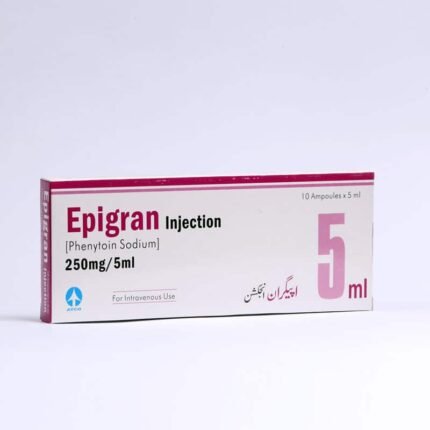
Phenytoin: Uses, Side Effects & Brands in Pakistan
Phenytoin is an anti-epileptic (anticonvulsant) medicine. It is a prescription medicine used for epilepsy and status epilepticus. In Pakistan it is available as suspension, injections and capsules, made by 4 different manufacturers. On this page you can read how it works, its common side effects and precautions, and compare the brands and prices available at Medimart.
How Phenytoin works
Phenytoin blocks sodium channels in nerve cells, which stabilises their membranes and stops them firing rapid bursts of electrical signals. This prevents abnormal electrical activity from spreading through the brain and triggering a seizure.
What is Phenytoin used for?
- Epilepsy and status epilepticus
Phenytoin is used to control several types of epilepsy, including tonic-clonic (grand mal) seizures and focal (partial) seizures. Given by injection, it is also used in hospital to stop prolonged or repeated seizures (status epilepticus) and to prevent seizures after a head injury or brain surgery. It controls seizures for as long as it is taken, so treatment is usually long term.
Side effects of Phenytoin
Side effects of Phenytoin are often linked to its level in the blood. Some of the more common are:
- Dizziness or unsteadiness
- Drowsiness
- Gum overgrowth
- Nausea
- Coarsening of facial features or extra hair growth
- Blurred or double vision
Get medical help at once for a skin rash, especially with fever or blistering, swollen glands, yellow skin or eyes, unexplained bruising or bleeding, sore throat or mouth ulcers, or thoughts of self-harm.
Precautions and warnings
- Do not stop Phenytoin suddenly, as this can trigger severe seizures; any change should be made gradually under medical supervision.
- Blood levels are checked because the gap between too little and too much is narrow, and brands should not be switched without your doctor's advice.
- It interacts with many medicines, including warfarin, some antibiotics, antifungals and hormonal contraceptives, which it can make less effective, so always check before starting anything new.
- Phenytoin can harm an unborn baby; if you could become pregnant, discuss contraception and pregnancy plans with your doctor before starting, and do not stop it without advice.
- Good dental hygiene reduces gum overgrowth. Avoid alcohol, and do not drive unless your seizures are controlled and local driving rules allow it.
Frequently asked questions about Phenytoin
What is the price of Phenytoin in Pakistan?
At Medimart, Phenytoin products currently in stock range from Rs 45 to Rs 2,684 per pack, depending on the brand, strength and pack size. The lowest-priced option right now is Dilantin 125mg Suspension at Rs 45. Prices are updated regularly, so the product list on this page always shows the latest price.Which brands of Phenytoin are available in Pakistan?
Phenytoin is sold in Pakistan under brand names such as Dilantin (Pfizer Laboratories Ltd), Epitoin (Adamjee Pharmaceuticals Ltd.), Epigran (Atco Laboratories Ltd) and Fentin (Geofman).Do I need a prescription for Phenytoin?
Yes. Phenytoin is a prescription medicine in Pakistan. Use it only when a doctor has prescribed it, at the dose and for the time they advise.
Can Phenytoin be used during pregnancy?
Phenytoin can harm an unborn baby; if you could become pregnant, discuss contraception and pregnancy plans with your doctor before starting, and do not stop it without advice.
Are all Phenytoin brands the same?
Brands that contain the same amount of Phenytoin in the same form are expected to work in the same way, although inactive ingredients, pack sizes and prices differ. Ask your doctor or pharmacist before switching from one brand to another.
Phenytoin brands and prices in Pakistan
Medimart lists 5 products containing Phenytoin from different manufacturers. Compare strengths, pack sizes and prices below and order online with cash on delivery.